
No Countywide Des Moines Arrest Log
No countywide 72-hour arrest log exists. The sheriff's jail page covers facility services, not people. Burlington Police publishes daily PDFs for its own arrests, so West Burlington and sheriff-policed towns call for separate agency checks.
A Burlington PDF from 2015 did carry the title "Arrest Blotter" and spanned more than one day. That proves an older format once existed. It does not mean the city still uses it. Today the official archive is a series of separately dated Daily Arrest Log files. Seeing a multi-day span means opening several dates at once or digging through local publication archives.
Read the Des Moines County Blotter
Work backward from the newest official agency record. Keep the source agency attached to every entry, so a Burlington city report never gets mistaken for countywide coverage.
- Choose the date range, allowing extra dates around a weekend or holiday.
- Open Burlington's dated Daily Arrest Log PDFs for each relevant day and note the printed cutoff.
- Compare names, dates, agency, location, and incident references rather than relying on a headline.
- Check The Hawk Eye, Burlington Beacon, or KBUR only for additional published context, not live custody.
- For a missing or older record, ask the arresting agency for the underlying report with a narrow date range.
Need only the newest Burlington arrests? Use Arrests Last 24 Hours instead of rebuilding a multi-day blotter. Someone named in an older blotter may have been released, transferred, or never held after a non-custody booking.
Fields in a Burlington Arrest Entry
Burlington's media summary beats any news digest for detail. The table describes verified city-report fields, not a sheriff roster.
| Field | Meaning and limit |
|---|---|
| Arrest date and time | When police recorded the arrest, which may differ from jail intake. |
| Name and birth date | Identity details; people under 18 are replaced with a juvenile offender label. |
| Arrest type and agency | Helps separate a custody booking from another arrest-report type. |
| Location and related incident | Connects the entry to place and police report references. |
| Offense, statute, and class | The charge and classification reported at arrest. |
| Court | The listed court destination, not the outcome. |
| Photograph | No booking photo appeared in the sample reviewed. |
One person can fill several charge rows. Row totals are not head counts. A listed court or statute tells you nothing about a later dismissal or a prosecutor's change to the charge.
Local Multi-Day Arrest Publications
The Hawk Eye NewsBank archive is the strongest recurring local blotter source. Coverage runs from 1995 to today. Public results describe Arrest Log material pulled from area law-enforcement logs, and some agencies mix arrests with citations, so each item needs careful reading. Access can require a subscription.
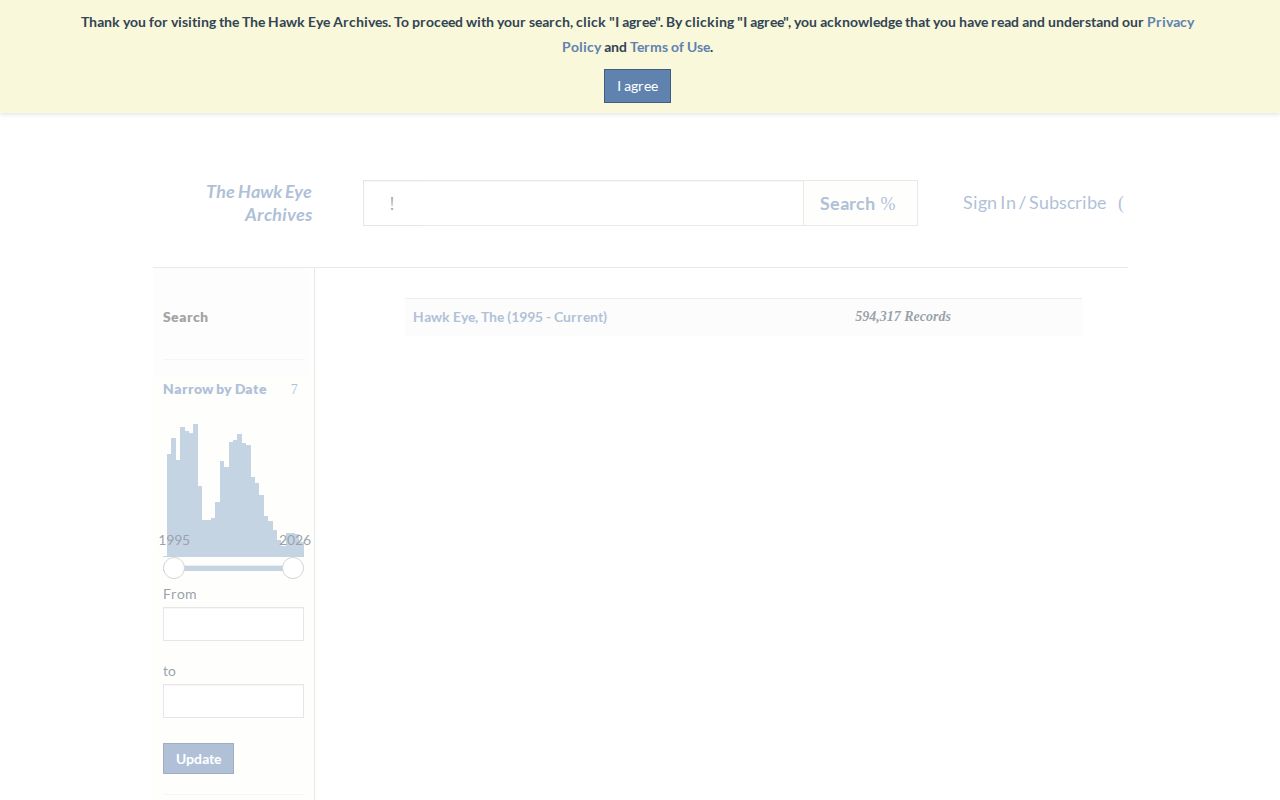
The archive search route appears on the official NewsBank page rather than a jail roster. It is no guaranteed daily list. The Burlington Beacon legal archive carries an "Arrests & Citations" example spanning several dates and locations. Burlington-area and Mediapolis entries appear among them. Publication can lag the event. The Beacon suits date context, not custody confirmation. It also skips agencies and blends arrests with citations.
Story-Based Des Moines Arrest Coverage
Not every arrest becomes a story. KBUR explains its county arrest coverage as selections from daily police logs based on newsworthiness. Good for context, not a full roll call.
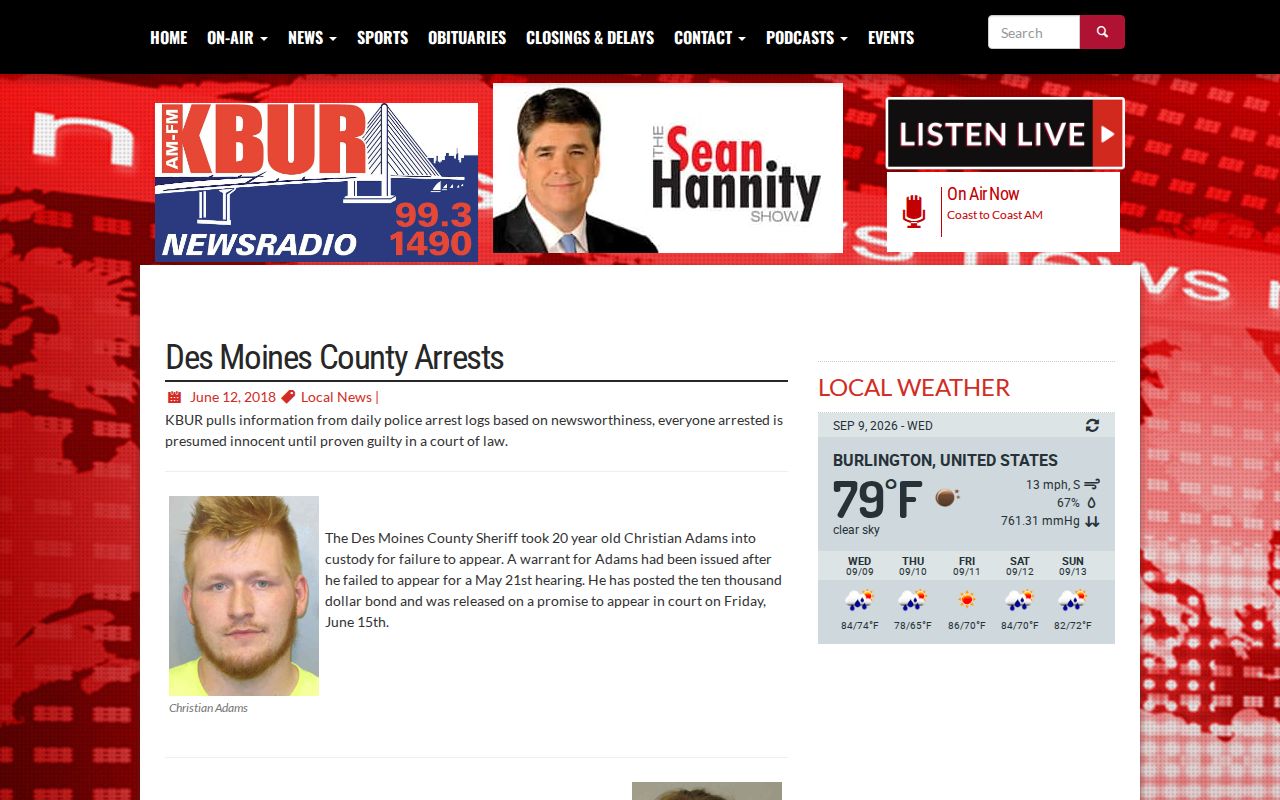
Story pages show how arrests become news. Southeast Iowa Union runs occasional regional crime stories rather than a continuous Des Moines County blotter. A Burlington resident may be arrested outside the county. So read the location and agency. Hometown alone should never decide whether a name counts in a Des Moines County arrest tally.
Weekend and Holiday Posting Patterns
Burlington's archive holds many calendar dates. The city names no fixed posting hour and no formal weekend or holiday schedule. Events can pile up before the next file or news issue lands. One arrest can also spawn several charge rows. A longer report does not prove more people were arrested. To study a weekend, pull the prior report plus the next business-day reports. Then compare their data cutoffs. Newspaper legal pages slice the span differently. Deduplicate by name, arrest time, agency, location, and incident number whenever those details appear.
Note: Weekend volume cannot be measured from row counts alone because repeated charges and delayed publication can change the apparent total.
Why Blotters Are Weak Trend Data
Blotters follow publication rules, not statistics. Missing dates, selective news judgment, mixed citations, juvenile masking, repeated charge rows, and format changes all skew the visible count. An archive can confirm that an item ran. It cannot safely prove that crime rose or fell. For an enforcement event, go to the originating report. For a case outcome, use Iowa Courts Online. For current jail custody, call the Correctional Center or use IowaVINE. These sources may disagree for a while because each one records a different stage of the process.
Agency Lines in Des Moines County Reports
Des Moines County splits its policing among several agencies. Burlington and West Burlington each run municipal departments. The Des Moines County Sheriff's Office patrols the unincorporated areas and covers Mediapolis, Danville, and Middletown under contract. So the town named in a newspaper item may not be the agency that made the arrest. Nor is it always the jail that held them. A date-range search works best with an agency map. Burlington keeps the deep public daily archive. West Burlington's official page offers police contact details and a report-request route, though it posts no current arrest log. Mediapolis gets sheriff contract service. It has no separate police arrest feed. Sheriff records, meanwhile, have to come from the county. The Des Moines County Correctional Center serves as the main county holding facility, but a shared booking destination does not merge every agency's data into one sheriff blotter.
Verify a Published Arrest Item
Write down the basics first. Publication title, issue or PDF date, agency, arrest date, and any incident number all matter. Then ask for an existing report. Do not ask staff to build a new list. Some publishers mix arrests with citations, so confirm with the originating agency which event type its record shows. Check the court only if a public case was filed. An arrest log can precede a complaint. Keep the publication and the docket as two separate sources, each with its own date, since not every citation or booking takes the same court path.
Des Moines Arrest Archives and Requests
Burlington's online blotter archive runs deep, with entries reaching back well before 2025. That depth comes with no promise of permanent retention, though. A missing date could mean several things. Maybe no report was filed, or the publication simply lapsed. A file may have been replaced, or the archive itself may have shifted. Look elsewhere for Des Moines County history and you hit similar walls. The county jail website serves current custody information, not a long-term booking repository. VINE tracks inmates now; it keeps no archive at all.
Iowa sets no single retention period for booking photos. Chapter 22, the state's open-records law, is silent on that point. Administrative rule 201-50.22 does list jail record periods. Several categories get two years. Injury reports get five. Booking photos get no listed period of their own.
Want an older Des Moines County document? Contact the agency that holds it. Start with the person's name and a date range. Add the agency, the record type, and your preferred format. Ask whether the record exists. If not, ask whether a schedule destroyed it or moved it elsewhere. The Sheriff's Records Division takes precise requests at so-clerical@dmcounty.com. The county records guide walks through the broader request path.
An Arrest Log Is Not a Verdict
Match the person carefully before drawing conclusions from an entry. Des Moines County has common surnames. A blotter line rarely proves identity on its own. Once you have a solid match, follow the filed matter. Check Iowa Courts Online. The Des Moines County Clerk of Court also works. Never treat a stale publication as the final word. The court docket carries the later procedural history that an early log entry cannot.